This morning, as I sat with this Acts 14 devotional, I found myself circling around two questions that would not let me go: What is faith? And what is a good life? They seemed like two separate questions at first, but the further I walked into Acts 14, the more they began meeting at a single point.
“Strengthening the souls of the disciples, encouraging them to continue in the faith, and saying that through many tribulations we must enter the kingdom of God.” — Acts 14:22 (ESV)
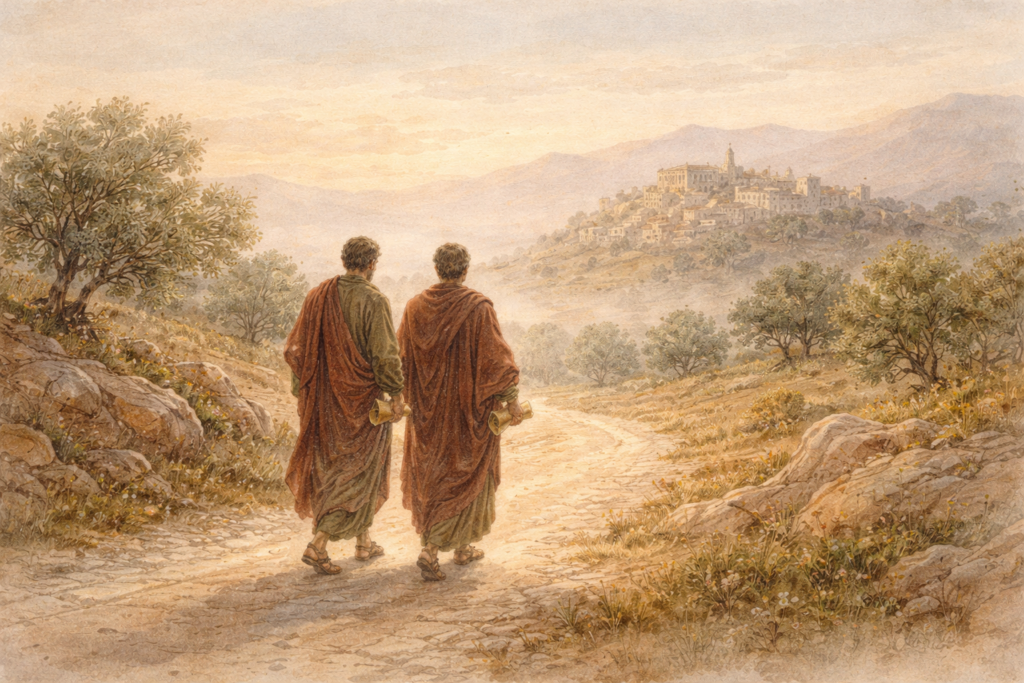
Acts 14 covers the second half of Paul and Barnabas’s first missionary journey — from Iconium to Lystra and Derbe, and then back again to Syrian Antioch. Packed into this short chapter are strangely contradictory scenes: crowds believing and crowds plotting to stone them (vv. 1–5), a miraculous healing followed immediately by the crowd trying to worship the apostles as gods (vv. 8–13), Paul stoned and left for dead — then rising the next day to walk to the next city (vv. 19–20). Luke narrates all of this with an almost flat, matter-of-fact tone. And at the end of it all, Paul and Barnabas retrace their steps through the very cities where they had been persecuted, appointing elders, committing them to the Lord, and returning home to report what God had done.
The Grammar of Shared Agency in Acts 14:3
The first verse that stopped me in this Acts 14 devotional was verse 3.
“So they remained for a long time, speaking boldly for the Lord, who bore witness to the word of his grace, granting signs and wonders to be done by their hands.” — Acts 14:3 (ESV)
What struck me was how the subject shifts twice inside a single sentence. They spoke boldly — but it was the Lord who bore witness, granting signs and wonders by their hands. I wanted to dig into the Greek a little, and I found that the phrase translated “speaking boldly for the Lord” is παρρησιαζόμενοι ἐπὶ τῷ κυρίῳ (parrēsiazomenoi epi tō kyriō). The preposition ἐπί (epi) means “upon” or “resting on.” So their boldness wasn’t generated from their own courage — it was boldness leaning on the Lord.
And the miracles? The Lord was the one acting, but their hands were the ones moving. I find a strange beauty in that grammar. The Lord doesn’t work apart from his servants, and he doesn’t let them work alone. The boldness is his, but the voice is theirs. The power is his, but the hands are theirs. This seemed to me the first picture of what it means to abide in the Lord: not passivity, not striving, but a relationship where agency is shared in a way only grace can arrange. (This is a note I’ve struck before, in an earlier Acts 5 devotional about what cannot be overthrown when something is of God — the same grammar, told from a different angle.)
Turning from Vain Things (Acts 14:15)
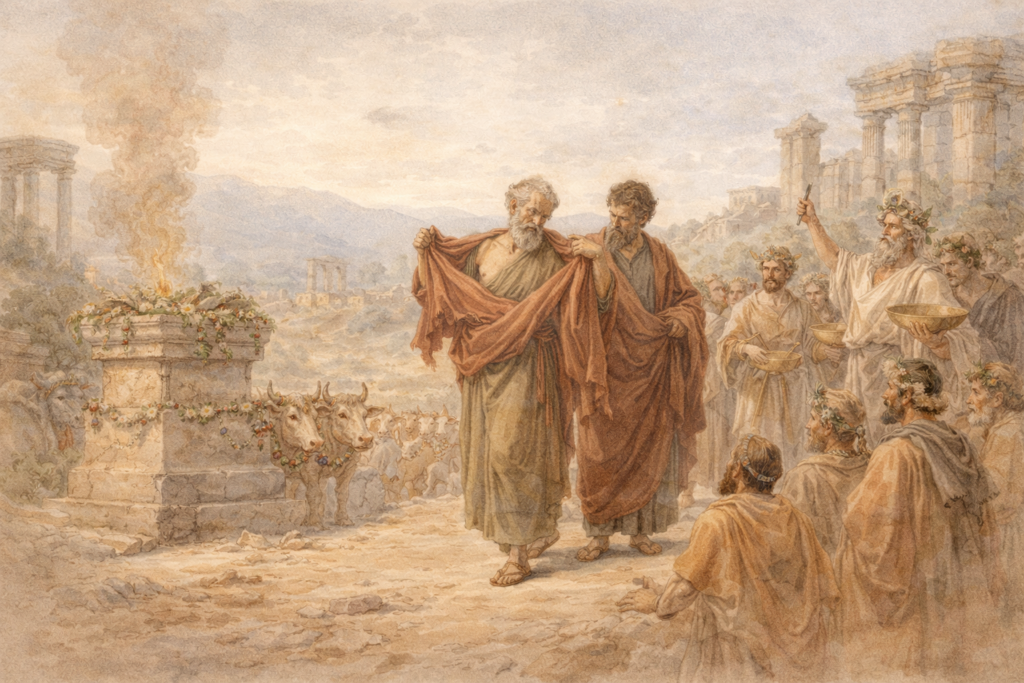
The second moment that arrested me was in Lystra, when the crowd began to treat Paul and Barnabas as gods. Paul tore his clothes and cried out:
“Men, why are you doing these things? We also are men, of like nature with you, and we bring you good news, that you should turn from these vain things to a living God, who made the heaven and the earth and the sea and all that is in them.” — Acts 14:15 (ESV)
Two Greek words here gave me pause. The phrase “vain things” is μάταιος (mataios) — meaning empty, without substance, things that ultimately amount to nothing. And “turn” is ἐπιστρέφω (epistrephō), which is more than “start believing” — it means to change direction, to reorient one’s whole bearing. (If you want to dig into the word itself, Blue Letter Bible’s lexicon entry on epistrephō traces it through the rest of the New Testament.)
That reframed faith for me. Faith is not simply an intellectual assent to God’s existence. It’s a reorientation — turning away from something and toward someone. And the question it presses on me is uncomfortably honest: What are my vain things? The wealth the world measures us by, the stimulations we chase, the urge to prove myself worthy — these are real substances in my daily life, but they may be “empty” in the sense Paul meant.
The other phrase that struck me was Paul calling himself and Barnabas “of like nature” with the crowd. The Greek is ὁμοιοπαθεῖς (homoiopatheis) — literally, “those who suffer and feel the same things.” Paul said this at the very moment the crowd was about to worship him. If he had accepted the applause — “Yes, I am God’s messenger, I deserve this honor” — that would have been the very moralism Tim Keller often described: righteousness as status, faith as self-elevation. Instead, Paul’s deeper faith made him smaller, not larger. The deeper one abides in God, it seems, the more clearly one sees one’s own frailty alongside everyone else’s.
What Is a Good Life in Christianity? (Acts 14:22)
And then comes verse 22, which untied a knot I had been carrying for a long time. It pressed me toward asking, bluntly, what is a good life in Christianity?
“Strengthening the souls of the disciples, encouraging them to continue in the faith, and saying that through many tribulations we must enter the kingdom of God.” — Acts 14:22 (ESV)
I wanted to check the Greek here too. “Through many tribulations” is διὰ πολλῶν θλίψεων (dia pollōn thlipseōn). The preposition διά (dia) means through — not around, not instead of, but through. Tribulation isn’t the detour we take when God’s plan goes wrong. It’s the very road on which the kingdom of God is entered. And the word translated “we must” is δεῖ (dei), which Luke often uses to mark something held inside God’s sovereign necessity.
I used to say, rather easily, “If you believe in God, your life becomes good.” I’ve come to think that sentence was careless. I have my own difficulties right now, and I’ve had them for as long as I can remember. Fifteen years ago I had them too. Faith has not lifted the weight of my life.
But sitting with Acts 14:22, I noticed something different. The change between the me of fifteen years ago and the me of today isn’t that I’ve grown stronger. It’s that I now have someone to share the weight with. I bring my suffering to God. I ask for wisdom in the middle of it. And that — not the absence of trouble — is what has been deepening.
So I’ve begun thinking that a good life in Christianity is not a life without suffering, but a life where suffering is shared with God. The problem is not trouble itself. The problem would be trouble carried alone, with no one to whom it can be brought. Acts 14:22 doesn’t promise us relief. It promises us company — and a road that leads somewhere.
Entrusted to the Grace of God, and Entrusting Again (Acts 14:23, 26–27)
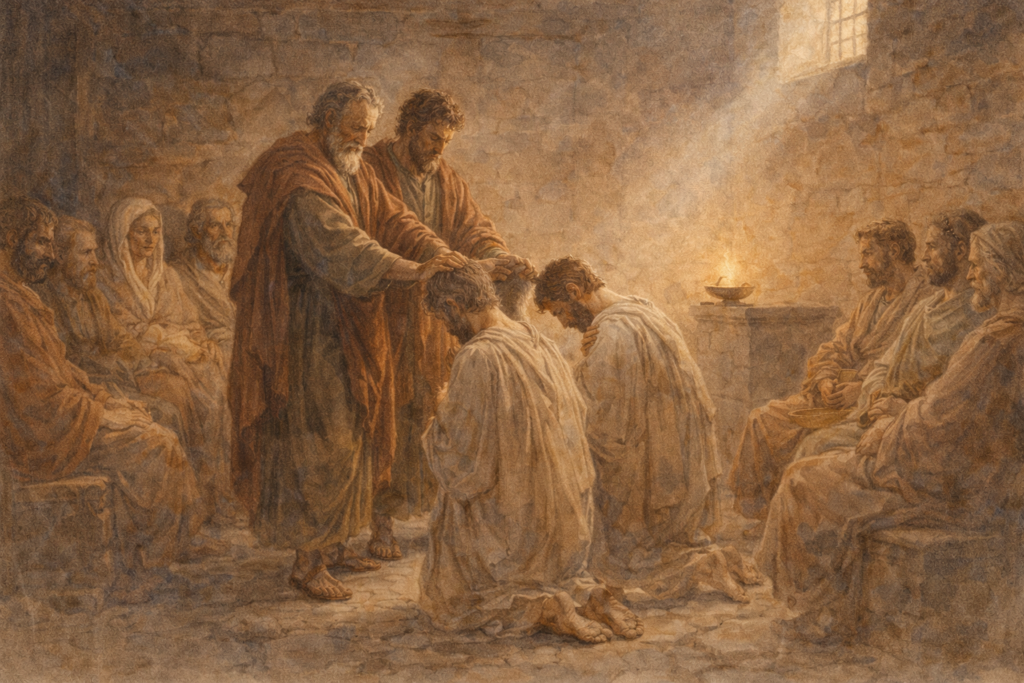
Toward the end of the chapter, one verb keeps recurring: to commit, to entrust.
“And when they had appointed elders for them in every church, with prayer and fasting they committed them to the Lord in whom they had believed.” — Acts 14:23 (ESV)
“…and from there they sailed to Antioch, where they had been commended to the grace of God for the work that they had fulfilled.” — Acts 14:26 (ESV)
“And when they arrived and gathered the church together, they declared all that God had done with them, and how he had opened a door of faith to the Gentiles.” — Acts 14:27 (ESV)
Paul and Barnabas had been entrusted to the grace of God at the start of the journey (v. 26, looking back to 13:3). Along the way, they entrusted the new elders to the Lord (v. 23). And when they returned, they reported not what they had done but “all that God had done with them” (v. 27). In the Greek, ὅσα ἐποίησεν ὁ θεὸς μετ’ αὐτῶν (hosa epoiēsen ho theos met’ autōn) — the subject is God, and the apostles are connected to him by μετά (meta), “with.” They are companions in the work, not authors of it.
This is the pattern running through the whole Acts 14 devotional for me: those who have been entrusted to the grace of God become the ones who entrust others. The apostles are genuinely active — they walk, they preach, they get stoned and rise again. But the source and destination of their action is never themselves. They move inside grace they didn’t originate, they hand others into that same grace, and they narrate the whole thing as God’s story, not their own.
I found myself thinking of the vine and branches in John 15. The verb there is μένω (menō), “to abide.” A branch bears fruit not by straining, but by remaining attached to the vine. Paul and Barnabas, I think, were living inside that grammar in Acts 14. Entrusted, they walked. And walking, they entrusted. (This theme of recognizing who the true actor is also surfaced in an earlier reflection — my Acts 11 devotional on eyes that recognize grace — where Barnabas sees what God has done before he sees what needs to be managed.)
Where the Two Questions Meet
Writing this Acts 14 devotional, I watched my two questions fold into one answer.
Faith is trusting that the values, the habits, the callings worth pursuing are the ones the Lord leads me into — turning from the empty things and remaining in him, while guarding that “remaining” from becoming a form of self-importance. It is the humility of Paul’s “of like nature with you.”
A good life is not a life without tribulation, but a life in which tribulation is shared with God — a life of abiding in him, being loved by him, and being conscious enough of that relationship to live inside it.
And these two meet at a single point: if faith is abiding, then a good life is the kind of abiding in which even our suffering becomes something we share with him. Paul and Barnabas walked through many tribulations, but they walked inside the flow of grace — entrusted and entrusting. That was what made their life good.
I want to add one careful note, though. I hope nothing I’ve written here gets read as “I have faith, so I can endure any suffering.” That would turn this into another form of self-reliance — a stronger individual, rather than a deeper relationship. What Acts 14 actually shows is not a reinforced Paul but a surrounded Paul: disciples gathered around him when he rose from the stoning (v. 20), churches commending him to grace (v. 26), God acting with him (v. 27). The good life isn’t me becoming stronger. It’s me remaining inside that relationship.
Frequently Asked Questions
Q: What does Acts 14:22 mean when it says “through many tribulations we must enter the kingdom of God”? A: The Greek preposition διά (dia) means through — not around or instead of. Acts 14:22 isn’t telling us to seek suffering, but that when suffering does come, it lies on the road to the kingdom rather than off of it. And the word δεῖ (“we must”) places this inside God’s sovereign design rather than presenting it as random misfortune.
Q: What is a good life in Christianity, according to Acts 14? A: Acts 14 reframes “a good life” as one lived inside the relationship with God, not one free of hardship. Paul and Barnabas endured stoning, plots, and expulsion, yet they described their journey as “all that God had done with them” (v. 27). A good life in Christianity, then, may be less about the absence of trouble and more about having someone with whom every trouble can be shared.
Q: What does it mean to be “entrusted to the grace of God”? A: The phrase appears in Acts 14:26, describing how the Antioch church had commended Paul and Barnabas to God’s grace before they left. Being entrusted to the grace of God means that the weight of a calling, a journey, or even a life rests ultimately on God’s care rather than on one’s own resources — and that those who receive this kind of commissioning are formed into people who can entrust others in the same way.
A Prayer to Close This Acts 14 Devotional — A Life Entrusted, and Entrusting Again
Lord, This morning, as I sat with Acts 14, I found myself lingering on the picture of a life entrusted, and entrusting again.
I saw how Paul and Barnabas walked and spoke and were stoned and rose, yet the source of everything they did was you. I saw how they handed the elders they had appointed back into your care.
Turn me, Lord, from the quiet illusion that my life is held together by my own hands. Let me turn away from the empty things and toward you, the living God. When difficulty comes, keep me from trying to carry it alone — let me bring it to you and ask you for wisdom in it. Teach me that the good life is not a life without tribulation, but a life where tribulation is shared with you. And let Paul’s confession — we also are men, of like nature with you — become the sentence by which I live among others, so that my faith never becomes a pedestal but always a road walked with neighbors. In the name of our Lord Jesus Christ I pray. Amen.
About the Author
Each morning I read one chapter of Scripture and reflect on its resonance in daily life. Writing from the perspective of a layperson rather than a trained theologian, I trace how the ancient text still meets us today.
📖 Learn more: About the Author