I opened Acts 11 this morning and, honestly, felt a bit caught off guard. It was almost the same story I’d read yesterday in chapter 10 — Peter recounting the Cornelius episode, this time before the Jerusalem church. But as I kept reading, I realized this Acts 11 devotional would hold more than simple repetition. What struck me most was the phrase “repentance that leads to life” in verse 18, and later, Barnabas arriving in Antioch and recognizing grace for what it was.
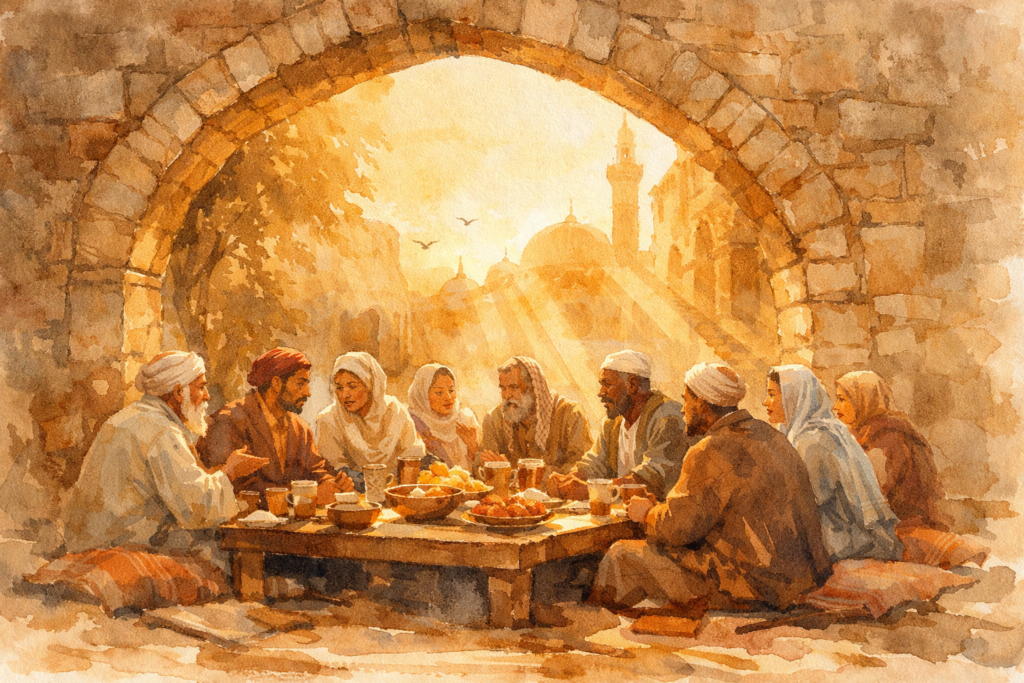
“If then God gave the same gift to them as he gave to us when we believed in the Lord Jesus Christ, who was I that I could stand in God’s way?” When they heard these things they fell silent. And they glorified God, saying, “Then to the Gentiles also God has granted repentance that leads to life.” — Acts 11:17-18 (ESV)
Acts 11 splits naturally into two halves. The first (vv. 1–18) shows Peter reporting the Cornelius event to the Jerusalem church, which moves from criticism to glorifying God. The second (vv. 19–30) tells of the birth of the Antioch church and its relief offering to Judea. It’s a short chapter, but this Acts 11 devotional captures a turning point: the moment theological confirmation becomes a living community.
From Criticism to Glory — The Power of Testimony in Acts 11
The Jerusalem believers’ first reaction was to criticize Peter: “You went to uncircumcised men and ate with them” (v. 3). Understandable — table fellowship with Gentiles was outside the boundary of their world. But after hearing Peter’s account, their response shifted entirely. They “fell silent” and “glorified God” (v. 18).
That transition struck me. From criticism to glory. What stood between the two wasn’t a debate — it was a testimony of what God had done. And I started to think that Luke’s repetition of chapter 10’s content here wasn’t redundant at all. It seemed intentional – and it’s what makes this Acts 11 devotional more than a rehash of chapter 10: when an experience of God’s work is spoken aloud before a community, it becomes something more — it becomes witness.
Repentance That Leads to Life — God’s Gift, Not Ours
The phrase that anchored this Acts 11 devotional for me was in verse 18: “repentance that leads to life.” In Greek, it’s μετάνοια εἰς ζωήν (metanoia eis zōēn). When I think of repentance, the image that usually comes to mind is heavy — guilt, remorse, turning back. But this verse says the destination of repentance isn’t judgment. It’s life.
What’s even more striking is the verb. “God has granted repentance” — ἔδωκεν (edōken), “gave.” Repentance isn’t something humans strain to produce on their own. It’s described here as a gift God gives. The Gentiles didn’t qualify themselves through rigorous repentance; God gave repentance itself as a gift.
This felt like the same gospel grammar Tim Keller keeps returning to in his Romans commentary — the distinction between law and gospel. In a legalistic framework, repentance is a human condition: “You must repent sufficiently before God will accept you.” But here the order is completely reversed. God poured out the Spirit first (chapter 10), and then the church realized, “Oh — even repentance was something God gave.” Acceptance isn’t the result of repentance; repentance is the response to acceptance. No wonder they “fell silent.” There was nothing left to say. God had already acted. For me, this reversed order is the theological heart of this Acts 11 devotional.
Barnabas’s Eyes — Who Sees Determines What Is Seen
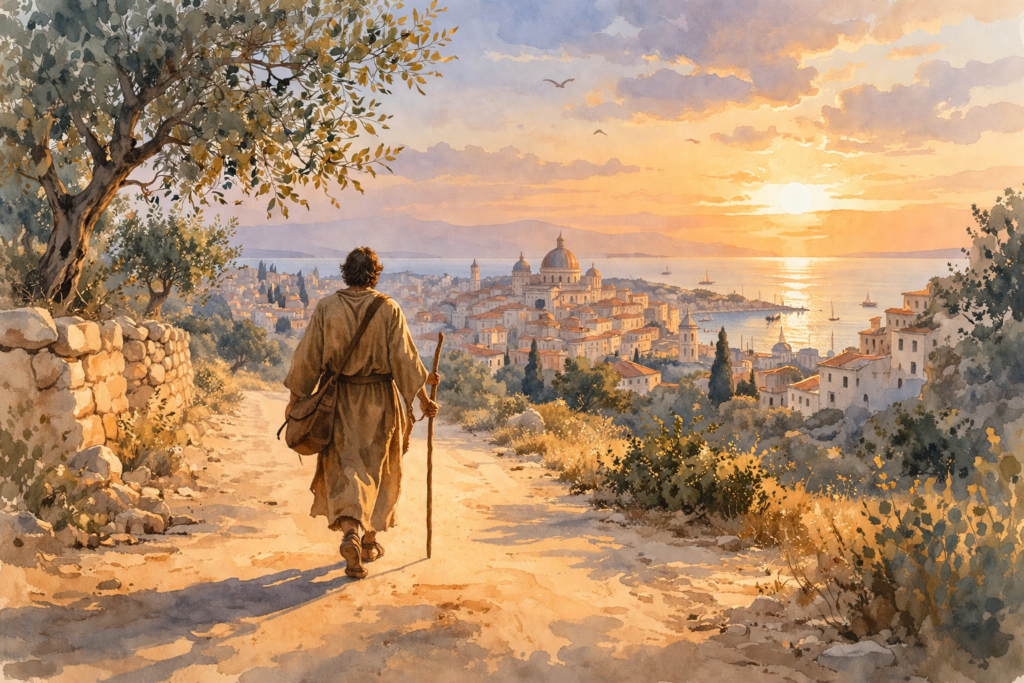
The second half of this Acts 11 devotional tells the story of the Antioch church’s birth. After Stephen’s martyrdom, scattered believers traveled as far as Antioch, and some men from Cyprus and Cyrene began preaching to the Hellenists as well. When Jerusalem heard, they sent Barnabas — likely on a fact-finding mission.
But what Barnabas did when he arrived wasn’t an inspection. “When he came and saw the grace of God, he was glad, and he exhorted them all to remain faithful to the Lord with steadfast purpose” (v. 23). And then Luke inserts a rare character description: “He was a good man, full of the Holy Spirit and of faith” (v. 24).
I’m told Luke very rarely offers direct character evaluations like this in Acts. Stephen receives a similar description (6:5), and it’s followed immediately by the unfolding of his ministry. It seemed to me that Luke’s note here serves as an explanation to the reader: this is why God worked through this particular person. Barnabas could recognize grace as grace because of who he was — full of the Spirit and faith. If someone else had been sent — someone who, like those in verse 2, would have started with circumcision questions — the same scene might have produced an entirely different report. Who sees determines what is seen.
Barnabas didn’t stop there. He went to Tarsus to find Saul (v. 25) — the man who, after his Damascus road conversion, hadn’t been fully accepted by the Jerusalem apostles and had returned to his hometown. Barnabas had already been Saul’s first advocate, introducing him to the apostles back in chapter 9. And here again, he sought out a man the community had seemingly forgotten and brought him to a new stage. He didn’t hoard the Antioch ministry for himself; he found the right person and set him up. The “Son of Encouragement” (4:36) — living up to his name. This pattern of God working through unlikely people echoes what I explored in the Acts 3 devotional on holoklēria — wholeness coming through unexpected channels.
A Gospel That Flows Both Ways — Antioch’s Relief to Judea
One small but meaningful scene closes this Acts 11 devotional. When the Antioch disciples heard about a coming famine, they decided to send relief to the brothers in Judea, “every one according to his ability” (v. 29). Antioch was a predominantly Gentile church. Judea was the church that had just been debating whether Gentiles should even be accepted. And yet it was the newer, less-established community that reached out first — not certain of how they’d be received, but extending their hand anyway. This wasn’t simple charity. It was a confession in action: we are one body in the gospel.
Looking at the whole chapter, I saw a single flow emerge. In the first half, the Jerusalem church acknowledges that God has accepted the Gentiles and glorifies him. In the second half, the Gentile church in Antioch serves the Jewish church with a relief offering. Acceptance and service flowing in both directions. The gospel doesn’t create a one-way patronage — it creates a relationship of mutual abiding. From the power to witness in Acts 1 to this mutual care in Acts 11, Luke has been tracing how the Spirit builds not just individual faith but an interconnected body.
A Prayer to Close This Acts 11 Devotional

Lord, As I read Acts 11 today, I found myself thinking about Barnabas — a man who saw grace happening and recognized it for what it was. I want eyes like his. Too often I try to judge Your work by my own standards and frameworks. When what You are doing doesn’t fit the shape I expect, I fail to see it. Open my eyes, Lord.
Before the confession that even repentance is a gift You give, I lay down my legalistic thinking. Free me from the belief that I must perform well enough to be accepted, that I need to earn my qualifications first. Let me live a life that responds to what You have already done. Make me someone like Barnabas — someone who recognizes people, lifts them up, and makes room for others rather than claiming the stage.
In the name of our Lord Jesus Christ I pray. Amen.
Each morning I read one chapter of Scripture and reflect. I hope today’s devotional leaves a quiet resonance in your day as well.
Acts Devotional Series
- Acts 1 – The Power to Be a Witness
- Acts 2 – On Resurrection Joy and a Lighter Heart
- Acts 3 Meditation — Holokleria and the Faith That Makes Whole
- Acts 4 Devotional — The Stone the Builders Rejected Became the Cornerstone
- Acts 5 Devotional — If It Is of God, You Cannot Overthrow It
- Acts 6&7 Devotional — God Does Not Dwell in Houses Made by Human Hands
- Acts 8 Devotional — The Heart That Tried to Buy Grace, and the God Who Crossed Every Barrier
- Acts 9 Devotional — An Unfathomable Calling, a Trembling Obedience, a Total Transformation
Pingback: Acts 15 Devotional: When What We Hold Becomes a Yoke