This morning’s reading closed a four-week walk through the book of Acts. The verse that caught my eye wasn’t anything new in the chapter — it was, of all things, a quotation. Paul’s final word to the Jewish leaders in Rome wasn’t fresh revelation. It was an ancient line from Isaiah about hearing but never understanding. And that quiet anticlimax kept tugging at me all day.
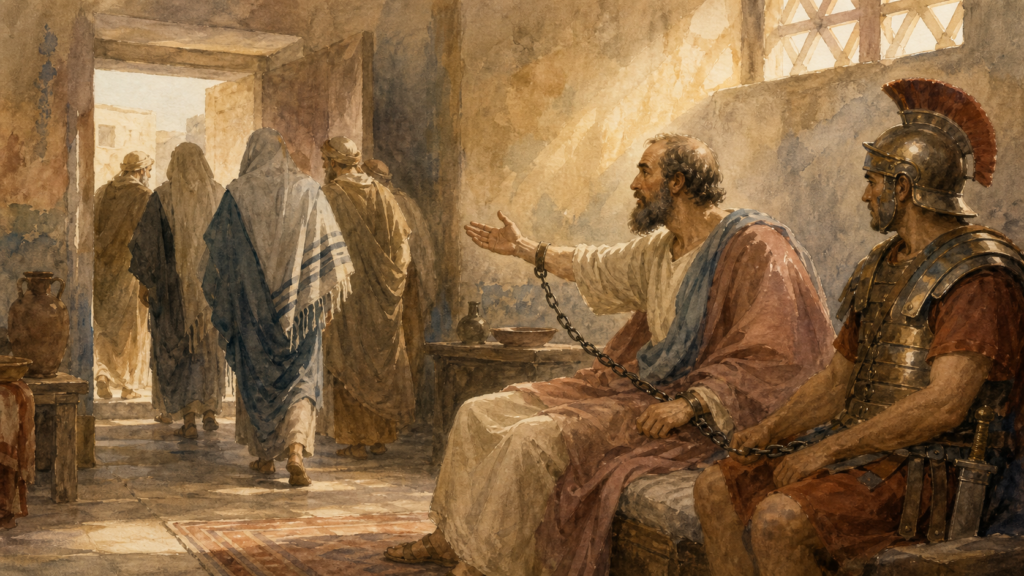
“And disagreeing among themselves, they departed after Paul had made one statement: ‘The Holy Spirit was right in saying to your fathers through Isaiah the prophet: “Go to this people, and say, ‘You will indeed hear but never understand, and you will indeed see but never perceive.’ For this people’s heart has grown dull, and with their ears they can barely hear, and their eyes they have closed; lest they should see with their eyes and hear with their ears and understand with their heart and turn, and I would heal them.'” — Acts 28:25-27 (ESV)
A Strange Way to End the Book of Acts
Acts 28 carries an odd weight as a closing chapter. Paul washes ashore on Malta after the shipwreck, survives a viper bite that the islanders read first as judgment and then as divinity, heals the chief official’s father, and finally makes his way to Rome. Once there, brothers from the Roman church travel out to meet him — some as far as the Forum of Appius, some only as far as the Three Taverns. Paul gathers the Jewish leaders, lays out his case, and spends a full day teaching from “the Law of Moses and from the Prophets” to persuade them about Jesus (Acts 28:23). Some are convinced. Others are not. As they argue and start to leave, Paul lets one parting word fall behind them — a quotation from Isaiah 6:9-10.
This is the last sustained piece of preaching in the entire book. And it ends not with new revelation but with an ancient diagnosis.
Nothing New: An Ancient Diagnosis
The phenomenon of hearing but never understanding did not begin in first-century Rome. It went all the way back to Isaiah’s call in the eighth century BC. Centuries pass, the Messiah comes, the gospel travels across the empire and finally reaches the imperial capital — and the very same diagnosis surfaces again at the end of the line.
That should sober anyone who reads this Acts 28 Isaiah quotation honestly. The condition Paul names here is persistent across cultures and centuries. Which makes it impossible to read the passage as something that only happened to them, back then.
Who Is Paul Speaking To?
The first time through, I assumed verses 25-27 were a verdict on the Jewish people and a clean transition to the Gentile mission. Verse 28 says exactly that (“this salvation of God has been sent to the Gentiles”). But sitting with verse 25 longer, the address is striking: “The Holy Spirit was right in saying to your fathers through Isaiah.” Your fathers. Paul is not writing his people off. He is holding a mirror up to the very men leaving the room.
And the Isaiah 6:9-10 quotation ends with this: “…and I would heal them.” That is not a slammed door. That is a diagnosis spoken in the hope that the patient might still take the medicine. It is the language of unhealed grief, not abandonment.
This becomes clearer when you remember Paul’s own heart toward his kinsmen. In Romans 9:1-3 he writes:
“I am speaking the truth in Christ — I am not lying; my conscience bears me witness in the Holy Spirit — that I have great sorrow and unceasing anguish in my heart. For I could wish that I myself were accursed and cut off from Christ for the sake of my brothers, my kinsmen according to the flesh.”
A man willing to trade his own place in Christ for his people’s salvation does not casually pronounce them lost. The Acts 28 Isaiah quotation, read against that backdrop, is not Paul shutting a door. It is Paul holding up one last mirror — desperately hoping that they might still see what they have refused to see.

Where Does the Dullness Come From?
The hardest line in the passage is verse 27: “…lest they should see with their eyes and hear with their ears and understand with their heart and turn, and I would heal them.” Read quickly, it sounds as if God himself produces the dullness specifically to prevent healing — which is a profoundly uncomfortable reading.
But I don’t think that’s what the text is saying. So why does the heart grow dull in the first place? The proclamation of the word doesn’t create dullness from nothing — it exposes a dullness that was already there. The closest biblical parallel is Pharaoh in Exodus, where Scripture says both “Pharaoh hardened his heart” and “the LORD hardened Pharaoh’s heart,” sometimes within the same passage. The word didn’t manufacture Pharaoh’s stubbornness. It revealed it, brought it into the open, and confirmed him in the direction he had already been leaning.
The same word goes out to many ears. Some are broken by it. Some are hardened by it. The word isn’t the source of the dullness. It is the light that shows which way the heart has been tilting all along.
The Heaviest Place This Diagnosis Lands
If that’s right, then this passage doesn’t land hardest on people who haven’t heard. It lands hardest on people who’ve heard a great deal. Isaiah’s audience knew the Torah. Paul’s audience knew Moses and the Prophets cold. They were the religiously literate — the ones most confident they already understood. There’s a sobering parallel here to the Sanhedrin in Acts 23, where conviction itself can quietly become a form of defying God. The diagnosis names exactly that group.
Which means the mirror in this passage is angled, uncomfortably, at me. I open the Bible every morning. I write about it. I have categories for verses, frameworks for passages, mental folders for what this means. When a familiar text comes up, my head has often filed it away before my heart has had time to feel it. Ah, this is the verse about ___. And once it’s filed, it stops disturbing me. I felt the same kind of mirror in Acts 19, watching Demetrius’s outrage and recognizing my own shape in it.
Hearing but never understanding. Seeing without seeing. That diagnosis isn’t ancient. It’s this morning.

Bringing the Gap to Prayer
The honest summary of where today’s reading landed me: I can know in my head and not follow in my heart. I hear, but it doesn’t go deep. I understand, but it doesn’t reorder my life.
What gives me hope is that neither Isaiah nor Paul ever instructs the dull-hearted to manufacture a tender heart by trying harder. The end of verse 27 names the way out: “…and turn, and I would heal them.” There is Someone who heals, and the healing is his work. My part isn’t to grit my teeth and force my heart open. My part is to carry the gap — between head and heart, between knowing and being moved — to the One who can close it.
“Lord, open my ears. Soften my heart.” That’s where today’s reading takes me.
Frequently Asked Questions
Q: What does “hearing but never understanding” mean in Acts 28? A: The phrase comes from Isaiah 6:9-10, which Paul quotes as his final word to the Jewish leaders in Rome. It describes a spiritual condition where someone receives the words of God outwardly but never lets them reach the heart. In context, it is not a curse but a diagnosis — given so that those who recognize themselves in it might turn and be healed.
Q: Why did Paul quote Isaiah 6 in his final words at Rome? A: Paul wasn’t pronouncing a final verdict on the Jewish people. The address in verse 25 — “the Holy Spirit was right in saying to your fathers” — points the warning directly at the men in the room. Paul is holding up a mirror, not closing a door. Read alongside Romans 9:1-3, where Paul says he would willingly be cut off from Christ for his kinsmen, this Acts 28 Isaiah quotation reads as lament, not abandonment.
Q: Does God cause people’s hearts to grow dull? A: The text says God commands Isaiah to “make the heart of this people dull” — which sounds at first like God is creating the condition. But read alongside Pharaoh in Exodus (where Scripture says both that Pharaoh hardened his heart and that the Lord hardened it), a clearer picture emerges. The word of God doesn’t manufacture dullness from nothing. It exposes a dullness that was already there and confirms the heart in the direction it was already leaning.
Today’s Prayer — Hearing But Never Understanding
Lord, thank you for bringing me again to this place of prayer today.
I confess that the place of hearing but never understanding is my place too. I open your Word every morning, but the Word so often stays in my head and never reaches the deep places. The familiarity that should be a gift has dulled my listening. I lay before you the gap between what I know and what I live — between hearing and being moved.
Open my ears. Soften my heart. Let the Word I read every day disturb me, move me, and turn me — every morning, fresh. Heal what has grown dull in me, because I cannot heal it myself.
In the name of our Lord Jesus Christ I pray. Amen.
About the Author
Each morning I read one chapter of Scripture and reflect on its resonance in daily life. Writing from the perspective of a layperson rather than a trained theologian, I trace how the ancient text still meets us today.
📖 Learn more: About the Author
Pingback: Romans 2:7 Meaning — The One Who Seeks and Is Led