There is a quiet danger in the life of faith that has nothing to do with laziness, and this morning Romans 10 set it right in front of me: the danger of establishing our own righteousness while believing we are doing the very opposite. Paul opens this chapter grieving over his own people, and the diagnosis he reaches for is strange. Their problem was not that they lacked zeal. It was that their zeal was aimed in the wrong direction.
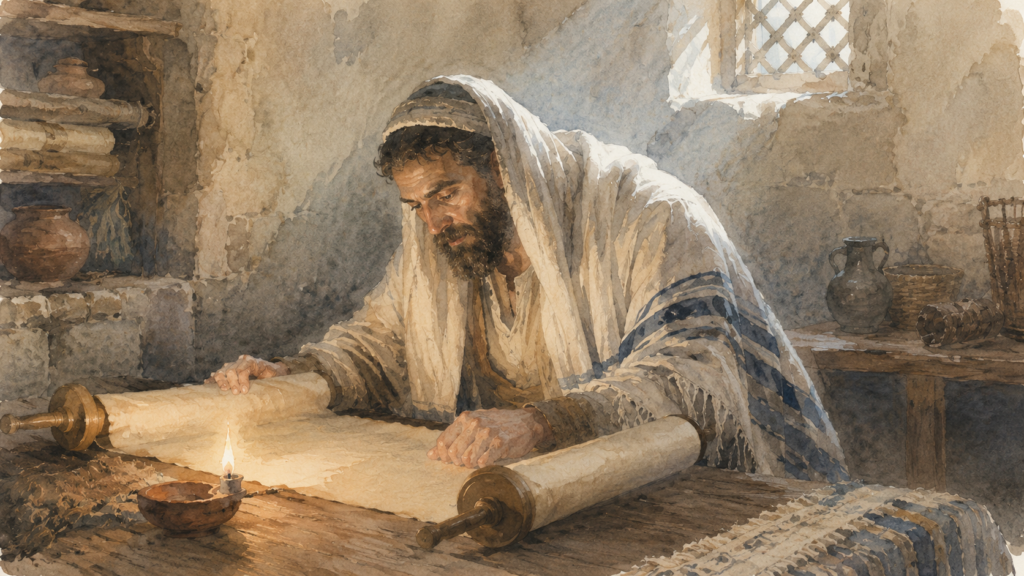
“Brothers, my heart’s desire and prayer to God for them is that they may be saved. For I bear them witness that they have a zeal for God, but not according to knowledge. For, being ignorant of the righteousness of God, and seeking to establish their own, they did not submit to God’s righteousness. For Christ is the end of the law for righteousness to everyone who believes.” — Romans 10:1–4 (ESV)
Romans 10 carries forward the ache that opened chapter 9: why have God’s own people stumbled at the very gospel meant for them? If chapter 9 looked down on this question from the height of God’s sovereignty, chapter 10 comes down to ground level and looks at it from the human side. These first four verses are the sharp, compressed diagnosis. What follows in verses 5–13 contrasts two kinds of righteousness — one based on doing, one based on believing — and from verse 14 onward Paul traces how that believing reaches a person through hearing.
Zeal Was Never the Problem
The phrase that stopped me in verse 2 was “a zeal for God.” Paul does not deny Israel’s zeal. He grants it. They had real, burning devotion (ζῆλος, zēlos, fervent ardor) toward God. The trouble was that this zeal was not according to knowledge.
I had to sit with that, because my instinct, whenever something feels off in my faith, is to assume I simply am not trying hard enough. Not praying enough, not reading enough, not disciplined enough. But the problem Paul names in Israel is not the quantity of zeal — it is its direction. Sincerity, it turns out, is no guarantee that I am standing in the right place. The hottest devotion can run right alongside the deepest error. That is a sobering thought, and I suspect it lands hardest on those of us who have been at this a long time.
The word Paul chose for “knowledge” here is not bare information. It is ἐπίγνωσις (epignōsis), a knowing that perceives the very nature of a thing. So what Israel lacked was never information about the law. They knew the law better than anyone. What they missed was what the law had been pointing to all along.
Seeking to Establish Our Own
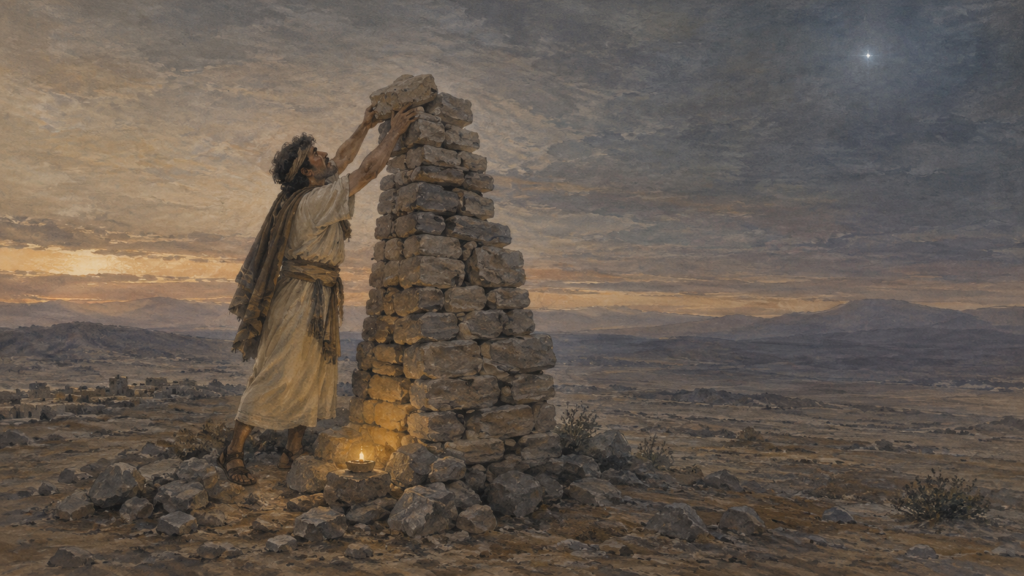
Verse 3 is the heart of the passage. Three movements are packed into one short sentence: being ignorant of God’s righteousness, seeking to establish their own, and therefore not submitting to God’s righteousness.
That last word, “submit,” is where the passage opened up for me. The Greek is ὑποτάσσω (hypotassō), to arrange oneself under, to fall into rank beneath an order. It carries the sense of a soldier taking his assigned position under command. To submit to God’s righteousness, then, is to set myself underneath it. But a person bent on establishing his own righteousness can never put himself underneath anything — because establishing my own righteousness already means I stand on top.
Here ignorance and pride turn out to be one thing, not two. Not knowing God’s righteousness is what drives me to build my own, and building my own is what keeps me from ever submitting. So this is not the kind of ignorance that more information could cure. If teaching more law could have solved it, Israel — who knew the law inside out — would have been cured long ago. This was a matter of knowing and a matter of posture at the same time. The refusal to place myself underneath was the very thing veiling what I most needed to see. Which is why “I didn’t know” never quite works as an excuse.
Christ, the End of the Law

And then verse 4: Christ is the end of the law. The word rendered “end” is τέλος (telos), and it holds two meanings at once — a terminus and a goal. The way a finish line is both where a race stops and the very thing the whole race was running toward.
So to say Christ is the telos of the law is not to say the law was discarded as rubbish. It is to say that at the destination the law had been pointing toward all along, Christ is standing. The righteousness the law kept demanding was, in fact, already complete in him; the law was the guide bringing us to Christ, as the broader evangelical reading of texts like Galatians 3:24 has long held. You can trace the wider witness to this at Blue Letter Bible and BibleGateway.
This is what turns everything over. Every effort to establish my own righteousness is, in the end, the labor of running past a finish line I never noticed I had already reached. Righteousness was never something out ahead of me, something I had to set a ladder against and climb to reach. Christ was already standing there as the finished righteousness. And so the way is no longer to climb the ladder higher, but to believe the One who has already finished it. That, I think, is why Paul adds “to everyone who believes” precisely here. The road to righteousness has shifted from doing to believing.
Establishing our own righteousness moves in one direction — “I will climb up and manufacture righteousness.” Receiving it moves the opposite way — “I will take the finished righteousness from his hand.” The same zeal for the same God, and yet the source of the righteousness runs in exactly opposite directions. This does not erase obedience. It only changes where obedience sits. As Tim Keller often put it, obedience becomes not the condition for being accepted but the response that flows from already having been accepted. Not something I stack up to earn approval, but something that follows because approval has already been given. This is the same shift I kept circling in an earlier reflection on Romans 8, where what the law could not do, God has done.
Where I Am Standing Today
What I actually meditated on this morning was a question turned back on myself: my prayer, my devotion, my serving — are these a response to Christ, or are they an attempt to prove my own righteousness to him? It is the kind of question the sheer volume of my effort can never answer, because Israel was second to none in zeal.
So today, before I begin anything, I want to pause and check the direction. Am I stacking this up to win God’s approval, or am I doing it standing on the righteousness already received from the One who has already received me? The same act, and yet that one difference in direction seems able to change the entire weight of my day. It is close kin to something I found while sitting with Romans 9 — that the deepest things are an identity received, not achieved.
Frequently Asked Questions
Q: What does it mean to establish your own righteousness in Romans 10:3? A: It means trying to build a standing before God on the basis of your own effort, performance, or moral achievement. Paul’s point is that this impulse, however sincere, keeps a person from submitting to the righteousness God freely gives in Christ. The two are mutually exclusive: to build my own is to refuse to receive his.
Q: Why does Paul say Israel’s zeal was “not according to knowledge”? A: Their zeal was genuine, but it lacked epignōsis — a true perception of what God’s righteousness actually is. They knew the law thoroughly, yet missed that the law was pointing to Christ all along, so their devotion ran in the wrong direction.
Q: What does it mean that Christ is the “end of the law”? A: The Greek telos means both terminus and goal. Christ is the end of the law not in the sense of discarding it, but in the sense of being its destination and fulfillment — the finished righteousness the law always pointed toward, now received by faith rather than achieved by works.
A Prayer to Close This Romans 10 Devotional
Lord, Thank you for letting me come once more to this place of prayer this morning. I see again the part of me that has tried to reach you through my own zeal — the part that quietly believed if I were only more diligent, more devout, you would at last accept me. I confess that this was not humility but pride, an effort to establish my own righteousness.
Let me believe that Christ has already become the end of the law and accomplished all righteousness. Teach me to set down my ladder and receive righteousness from his hand. Let my obedience be not a struggle to be accepted, but a response to the grace by which you have already received me. In the name of our Lord Jesus Christ I pray. Amen.
About the Author
Each morning I read one chapter of Scripture and reflect on its resonance in daily life. Writing from the perspective of a layperson rather than a trained theologian, I trace how the ancient text still meets us today.
📖 Learn more: About the Author